How to Support Interoceptive Seekers

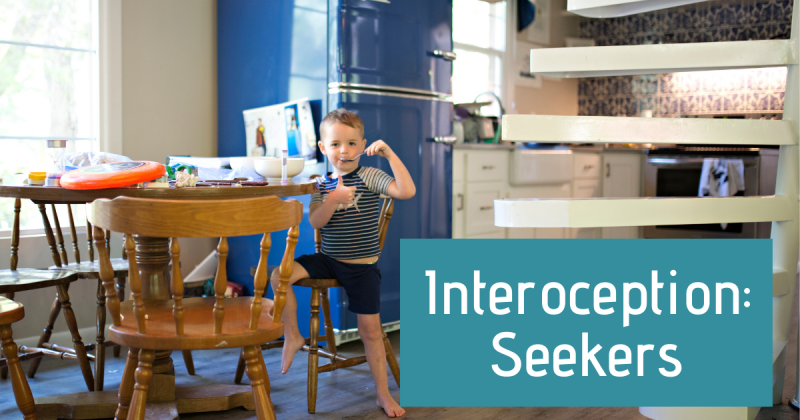
Interoceptive seekers crave sensory stimulation via their own internal bodily cues. Seekers may seem to need constant stimulation. Seekers may seem to need constant stimulation. However, they tend to become more deregulated as they take in more input. Many seekers experience symptoms associated with Attention Deficit Hyperactivity Disorder (ADHD), such low impulse control, inability to focus, and behavioral problems.

See below for some ways to identify and support interoceptive seekers.

Interoceptive Seekers May:

  • Have disproportionately weak reactions to normally bodily cues.
  • Crave interoceptive input and have problems with self-regulation.

How to Support Your Interoceptive Seeker:

  • Work with an occupational therapist or develop self-regulation strategies.

Keep in mind that no two children are exactly alike, and most people exhibit both seeking and avoiding behaviors from time to time. If you think your child might be suffering from sensory processing issues, you should seek a professional assessment. The STAR Institute’s Treatment Directory is a great resource that can help you find therapists, doctors, and community resources in your area.

How to Support Vestibular Seekers

Vestibular seekers are desensitized to movement and gravitational pressure and crave sensory stimulation via constant physical activity. Seekers may seem to need constant stimulation. However, they tend to become more deregulated as they take in more input. Many seekers experience symptoms associated with Attention Deficit Hyperactivity Disorder (ADHD), such low impulse control, inability to focus, and behavioral problems.

See below for some ways to identify and support vestibular seekers.

Vestibular Seekers May:

  • Appear to have hyperactivity or behavioral issues. 
  • Constantly be in motion—running, jumping, spinning, or climbing on furniture, etc.
  • Love being upside down and spinning in circles, but never seem to get dizzy.
  • Engage in fast, impulsive, or unintentionally rough movement while playing.
  • Have trouble concentrating while sitting or be unable to sit still for even short periods of time.

How to Support Your Vestibular Seeker:

  • Play with sensory-rich toys such as swings, bicycles, and trampolines.
  • Provide a variety of seating options, such as exercise balls, or bean bags.
  • Use footstools or resistance bands around chairs to provide stimulation while sitting.
  • Schedule regular times throughout the day to run in place, do push-ups, or do jumping jacks. This can be especially helpful when transitioning from one activity to another.
  • Work with an occupational therapist to develop a sensory diet—a set of physical activities that can be done at home and are tailored to your child’s needs.

Keep in mind that no two children are exactly alike, and most people exhibit both seeking and avoiding behaviors from time to time. If you think your child might be suffering from sensory processing issues, you should seek a professional assessment. The STAR Institute’s Treatment Directory is a great resource that can help you find therapists, doctors, and community resources in your area.

How to Support Auditory Seekers

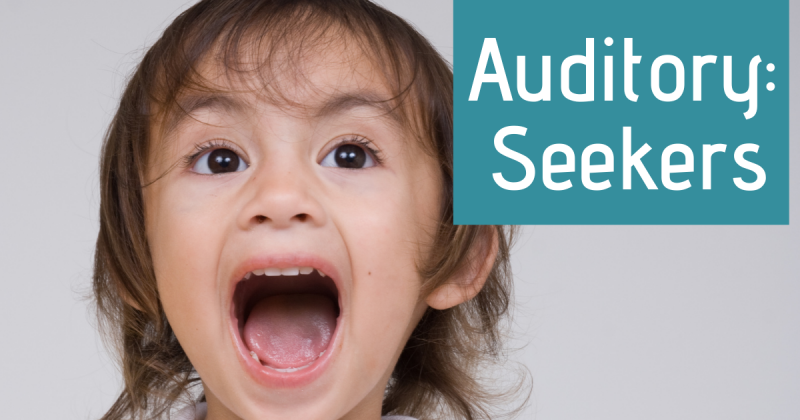
Auditory seekers are desensitized to sounds in their environment and crave sensory stimulation via loud or repetitive noises. Seekers may seem to need constant stimulation. However, they tend to become more deregulated as they take in more input. Many seekers experience symptoms associated with Attention Deficit Hyperactivity Disorder (ADHD), such low impulse control, inability to focus, and behavioral problems.

See below for some ways to identify and support auditory seekers.

Auditory Seekers May:

  • Seek out loud or busy environments.
  • Seem to always be yelling or speaking too loudly.
  • Make repetitive sounds, such as clapping, tapping, or clicking.
  • Have difficulty focusing on a task without humming or making noise.
  • Prefer to have constant background noise, such as music, TV, or a fan.
  • Insist on listening to TV or music at a volume that is uncomfortable to others.

How to Support Your Auditory Seeker:

  • Encourage playing with instruments and other noise-making toys.
  • Sleep with a fan, quiet music, or white noise machine.
  • Play TV, music, and games at an increased—but safe—volume.
  • Allow listening to headphones while studying or during dull/repetitive activities.
  • Schedule time throughout the day to sing, clap, or listen to music. This can be especially helpful when transitioning from one activity to another.

Keep in mind that no two children are exactly alike, and most people exhibit both seeking and avoiding behaviors from time to time. If you think your child might be suffering from sensory processing issues, you should seek a professional assessment. The STAR Institute’s Treatment Directory is a great resource that can help you find therapists, doctors, and community resources in your area.

Sensory struggles during the winter months

Sensory Struggles in Winter

Winter is here! For many of us, winter is a time of outdoor play, indoor coziness, and creating memories with family and friends. However, winter can bring a whole new set of challenges and for families with sensory needs.

This month, we’re taking a look at some common sensory struggles in winter and offer a few suggestions for keeping your child regulated, engaged, and safe during the cold months. Have another tip? Let us know in the comments!

Challenge #1 – Outdoor Winter Activities

Winter games like sledding, ice skating, and playing in the snow are generally great for seekers, particularly: tactile, vestibular, and proprioceptive. However, children with sensitivities and discrimination issues often struggle with these activities.

Proprioceptive and tactile avoiders may be unable to tolerate cold wind on their faces, fast movement, or being close to other children. Visual avoiders may become overwhelmed by the glare of snow and ice. Finally, those with vestibular, proprioception and visual discrimination disorders may have difficulty walking on snow or ice and keeping a safe distance from other children. 

Tips and Tricks:

  • Ease your child into new activities. Hold his hand and practice walking on ice and snow, slowly pull him around the yard in a sled, and help him pack snowballs.
  • Practice new or scary activities at home. Skate on the kitchen floor in your socks, have a snowball fight with socks or stuffed animals, or race to put on your snow gear.
  • Break down overwhelming or scary activities into small, manageable steps. (“First we sit on the sled, second we push, and third we lean back and ride.”)
  • Experiment with outdoor games and activities that don’t require being in close proximity to others, such as geocaching, Pokemon Go, or simply making snow angels.
  • Be mindful of seeking behavior in activities like sledding, skiing, and ice skating. If your child is being unsafe, try to figure out the sensation he’s craving and help him find other ways to achieve it.
  • Wear sunglasses or baseball hats to reduce glare from ice and snow.

Challenge #2 – Winter Clothing and Dry Skin

Even children without sensory issues can struggle with winter clothing. For tactile avoiders, however, getting into winter gear can feel completely overwhelming: sweaters are itchy, boots are heavy, coats are bulky and restrictive. They may find dry, irritated skin to be extremely painful but, along with olfactory avoiders, be unable to tolerate certain lotions or skin care products. On the other hand, those with tactile discrimination disorder and interoception discrimination disorder may not notice cracked or bleeding skin.

Tips and Tricks:

  • Avoid clothing made out of bulky or scratchy materials like wool. Stick to soft, comfortable layers of fleece, cotton, or flannel, and remember to remove the tags!
  • Have your child try on and approve every piece of outdoor gear―coats, hats, gloves, you name it. If you can, buy extras of smaller items in case something gets lost.
  • Find alternatives to uncomfortable items. Experiment with earmuffs instead of hats, hand warmers instead of gloves, or snowboarding pants instead of snow bibs.
  • Apply moisturizer frequently, especially after bathing. If your avoider can’t stand lotion, experiment with body bars, coconut oil, shea butter, or aloe vera gel.
  • Stay hydrated by drinking water throughout the day. Add fruit slices, flavor packets, or seltzer to combat flavor fatigue.

Challenge #3 – Sensitivity to Cold and Heat

Not everyone experiences the sensations of winter in the same way. Tactile avoiders may feel unbearably cold while playing outside or uncomfortably hot in certain types of clothing. On the other hand, tactile seekers may love to play outside on very cold days, hold snow in their bare hands, or take extremely hot showers. Finally, those with tactile discrimination disorder and interoception discrimination disorder may be unable to feel extreme temperatures at all, making them susceptible to frostbite or overheating.

Tips and Tricks:

  • Check in with your child frequently, especially during outdoor play, to make sure he’s not become overheated or becoming too cold.
  • Ease your child into the colder temperatures. Use indoor sensory bins to help him get used to the texture and cold of ice and snow.
  • Be mindful of seeking behavior around extreme cold. Put time limits on outdoor play and make sure gloves, hats, and coats are being worn.
  • Combat feeling cold by taking warm baths, heating up towels or clothes in the dryer prior to dressing, and making hot chocolate after playing outside.

Challenge #4 – New Foods and Smells

For most of us, winter means tweaking our diets to include more hot and multi-textured meals like stews, soups, and crockpot dishes. Many fruits and vegetables are out of season and will have a significantly different taste or texture than they do in the spring and summer. All of these changes can be extremely upsetting to gustatory avoiders and tactile avoiders. In addition to struggling with new foods, olfactory avoiders may be bothered by cleaning, cooking, and other household smells they might not notice when the windows are open.

Tips and Tricks:

  • Introduce new foods slowly and methodically. See our previous article for a step-by-step guide.
  • Have your child help plan and prepare meals. This will get him familiar with new smells, textures, and ingredients without having to taste them.
  • Know your child’s favorite foods and have a way to make them inside. For example, you might buy a George Foreman grill or grill pan to make burgers or hot dogs.
  • Be conscious of cleaning, cooking, and other strong or unpleasant household smells. Open the windows when possible and keep the house well-ventilated.

Challenge #5 – Staying Active

We all have different reactions to being cooped up inside on a cold winter day. Vestibular seekers and proprioceptive seekers may become manic and start bouncing off the walls, while vestibular avoiders and proprioceptive avoiders may become withdrawn and almost completely sedentary. No matter whether your child is seeking or avoiding, engaging in regular physical activity is critical for relieving anxiety, improving concentration, and transitioning between activities.

Tips and Tricks:

  • Schedule times throughout the day to do jumping jacks, stretch, or run in place. This can be especially helpful when transitioning into a new activity.
  • Have a designated area of the house where “rough” play is okay. Include things like pillow forts, obstacle courses, and crash pads, trampolines, etc.
  • Play family games that involve lots of movement, such as Twister, I Can Do That!, and The Floor Is Lava!
  • Have your child help with chores that involve executive functioning and proprioceptive input, such as snow shoveling and carrying groceries or laundry.
  • Experiment with different seating options that increase movement and concentration, such as yoga balls, foam rollers, and balance beams.

Combat boredom by bringing tents, pool toys, and other outdoor equipment inside. Experiment with alternatives to outdoor games, like the Hover Soccer Ball.

Challenge #6 – Changes in Routine

Like any significant disruption, the changes in routine brought on by winter break can be difficult for children with special needs. Without external timekeeping cues such as what class they’re in or where the sun is in the sky, children with interoception discrimination disorder often have difficulty knowing when to eat, when to sleep, and when they need to use the restroom. 

Tips and Tricks:

  • Prepare your child for any changes in routine. What exactly will be changing? What will stay the same? Are there new cues can he look for to know what to do next?
  • Set timers or alarms throughout the day to remind your child when it’s time to eat, use the restroom, or shift to another activity.
  • See our article for building good transition habits for more tips on establishing routines, creating rituals, and managing expectations.

Sensory Spotlight: Interoception (Internal Bodily Awareness)

This is the ninth and final installment in our Sensory Spotlight series.

Interoception is the body’s ability to recognize and interpret its own internal cues, such as hunger, thirst, exhaustion, and pain. Children with interoceptive processing issues typically have disproportionately weak or strong reactions to normal bodily urges, such as feeling hungry or needing to use the bathroom. They may not be able to recognize pain or symptoms of exhaustion, or they might be unable to properly gauge the severity of such symptoms. You can read more about how the interoceptive system works on the STAR Institute’s website.

Like proprioception, interoception is not as commonly recognized as other senses, but it plays a critical role in the body’s ability to regulate and protect itself. It’s how you know when you’re exhausted and need to rest, when you’re hungry and need to eat, or when you’re cold and need to put on a jacket.

See below for a quick guide on identifying interoceptive seeking, avoiding, and discrimination issues in children.

Interoceptive Seekers May:

  • Have disproportionately weak reactions to normally bodily cues.
  • Crave interoceptive input and have problems with self-regulation.

Interoceptive Avoiders May:

  • Have disproportionately strong directions to normally bodily cues.
  • Constantly feel they are hungry, thirsty, or need to use the bathroom.
  • Feel pain more intensely or for a longer duration than others.

Those with Interoception Discrimination Disorder May:

  • Have disproportionately weak reactions—or no reaction—to normal bodily cues.
  • Have a high pain threshold and may not notice when injured.
  • Be unable to register hunger, thirst, or the need to use the bathroom until it’s an emergency.
  • Be unable to detect increased heart rate or breathing and may not feel tired until totally exhausted.

Sensory Spotlight: Proprioception (External Bodily Awareness)

This is the eight installment in our Sensory Spotlight series.

Proprioception, also known as kinesthesia, is the body’s ability to locate itself and its extremities in space using receptors in the skin, muscles, joints, and ligaments. It’s responsible for knowing how much effort to use when performing simple tasks, such as lifting a glass or using a pencil. Children with proprioceptive processing issues may have trouble gauging their own strength, or they may appear clumsy and frequently bump into walls, furniture, or other people. You can read more about how the proprioceptive system works on the STAR Institute’s website.

Proprioception isn’t as commonly known as sight or smell, but it’s a critical component of knowing how your body is positioned in relation to the world around you and how it should be moving. It’s how you’re able to walk up a flight of stairs while looking at your phone or find your way to the bathroom in a dark house.

See below for a quick guide on identifying proprioceptive seeking, avoiding, and discrimination issues in children.

Proprioceptive Seekers May:

  • Bump or crash into people or objects on purpose.
  • Enjoy rough play and constantly seem to be wrestling with siblings or friends.
  • Tend to stand too close to others or touch others without permission.
  • Crave bear hugs, holding hands, and other kinds of physical pressure.

Proprioceptive Avoiders May:

  • Avoid physical contact with others.
  • Appear very timid around peers and avoid physical play.
  • Refuse to play around slides, swings, and other playground equipment.
  • Become anxious in crowded spaces or when standing even somewhat close to others.
  • Be unable to properly assess risk in their physical environment. For example, they may believe they can fall into the small gap between the floor and an elevator.

Those with Proprioception Discrimination Disorder May:

  • Be unable to determine how much force they’re exerting on toys, pencils, etc.
  • Be unable to walk through familiar rooms in the dark without bumping into things.
  • Accidentally hurt themselves or others while playing.
  • Be unable to walk up or down stairs without watching their feet.

Sensory Spotlight: Gustatory (Taste)

This is the seventh installment in our Sensory Spotlight series.

The gustatory system is responsible for the body’s ability to detect the chemicals in food that allow us to differentiate between sweet, salty, sour, bitter, and umami (savory) sensations. While the act of tasting is technically limited to this chemical process, the gustatory and olfactory senses are closely linked and combine to create what we perceive as flavor. Children with gustatory processing issues may have an unusually high or low appetite or very particular food preparation requirements (served at room temperature, chopped into small pieces, etc.). You can read more about how the gustatory system works on the STAR Institute’s website.

See below for a quick guide on identifying gustatory seeking, avoiding, and discrimination issues in children.

Gustatory Seekers May:

  • Seem to have an unusually large appetite.
  • Chew or suck on inedible objects, such as clothing or toys.
  • Prefer foods with specific flavors, such as sweet, bitter, or spicy.
  • Prefer foods with specific textures, such as crunchy, chewy, or mushy.
  • Enjoy the taste or texture of non-food items, such as Play-Doh, glue, or paint.

Gustatory Avoiders May:

  • Seem to have an unusually low appetite and/or be underweight.
  • Be “picky eaters” and have very specific food preparation requirements.
  • Avoid foods with specific flavors, such as sweet, bitter, or spicy.
  • Avoid foods with specific textures, such as crunchy, chewy, or mushy.

Those with Gustatory Discrimination Disorder May:

  • Be unable to detect flavor or distinguish between flavors.
  • Seem to have an unusually low appetite and/or be underweight.

Note: Contact your pediatrician immediately if you think your child is either eating non-food items or refusing food for any reason other than sensory issues.

Sensory Spotlight: Olfactory (Smell)

This is the sixth installment in our Sensory Spotlight series.

The olfactory system is responsible for the body’s ability to detect and recognize smells using chemical receptors in the nasal cavity. Children with olfactory processing issues may have trouble identifying hazardous or poisonous substances, such as gasoline, or they may be able to detect very faint scents others can’t perceive. Because smell is one of the two senses associated with flavor, sensitive children may also be hyper aware of smells associated with food and cooking. You can read more about how the olfactory system works on the STAR Institute’s website.

See below for a quick guide on identifying olfactory seeking, avoiding, and discrimination issues in children.

Olfactory Seekers May:

  • Actively smell everything, even things with unpleasant odors.
  • Prefer meals or specific foods with new or very strong smells.

Olfactory Avoiders May:

  • Complain about smells that are very faint or unnoticed by others.
  • Hold their noses or gag when encountering strong smells.
  • Refuse to eat foods with strong, new, or specific smells.
  • Avoid using public restrooms or eating in public spaces.

Those with Olfactory Discrimination Disorder May:

  • Be unable to recognize familiar or very common smells.
  • Accidentally eat spoiled food or nonedible, potentially harmful substances.
  • Be unable to detect hazardous chemical or burning odors. However, they might be vaguely aware that something is wrong.

Sensory Spotlight: Vestibular (Balance and Spatial Orientation)

This is the fifth installment in our Sensory Spotlight series.

The vestibular system is responsible for the body’s sense of balance, motion, and spatial orientation. Children with vestibular processing issues may appear clumsy or hyperactive. They may also have issues tracking objects visually or performing fine motor tasks. 

The vestibular sense is a function of the inner ear and usually works in conjunction with sight. For instance, you’re able to ride in a car without feeling dizzy or nauseous because your vestibular and visual systems are sending matching signals to your brain; motion sickness occurs when these signals become mixed. The sensation of moving up or down in an elevator is an example of your vestibular system working in isolation. You can read more about how the vestibular system works on the STAR Institute’s website.

See below for a quick guide on identifying vestibular seeking, avoiding, and discrimination issues in children.

Vestibular Seekers May:

  • Appear to have hyperactivity or behavioral issues. 
  • Constantly be in motion—running, jumping, spinning, or climbing on furniture, etc.
  • Love being upside down and spinning in circles, but never seem to get dizzy.
  • Engage in fast, impulsive, or unintentionally rough movement while playing.
  • Have trouble concentrating while sitting or be unable to sit still for even short periods of time.

Vestibular Avoiders May:

  • Don’t lift, tilt, or move your child without giving a warning.
  • Hold your child’s hand while walking to provide grounding and support.
  • Use a footstool if your child’s feet can’t comfortably touch the ground while sitting.
  • Provide calm alternatives to playground activities, such as hiking or catch.
  • Teach your child to focus on a static point inside the vehicle to avoid motion sickness.
  • Work on calming strategies and develop a plan for how to exit overwhelming situations.
  • Provide a quiet place to lie down after motion sickness or headaches.

Those with Vestibular Discrimination Disorder May:

  • Appear clumsy or uncoordinated.
  • Have poor posture or jerky, awkward movements.
  • Have difficulty determining their head or body position.
  • Be unable to determine their speed and direction of movement.
  • Have difficulty distinguishing right vs. left and may not appear to have a dominant hand.
  • Be unable to tell when they’re starting to fall and unable to catch themselves in time.
  • Have poor spatial awareness and depth perception.

Sensory Spotlight: Visual (Sight)

This is the third installment in our Sensory Spotlight series.

The visual system is responsible for the body’s sense of sight. It allows us to perceive variations in the size, shape, color, and brightness of objects. It also helps us gauge the distance and speed of objects and determine where we should focus our attention. Children with visual processing issues may crave screen time or become overwhelmed in bright, busy environments. You can read more about how the visual system works on the STAR Institute’s website.

See below for a quick guide on identifying visual seeking, avoiding, and discrimination issues in children.

Visual Seekers May:

  • Seek bright or busy environments.
  • Prefer toys with bright, reflective, or shiny surfaces.
  • Be distracted by objects with spinning, flashing, or moving lights.
  • Insist on clothing and toys with specific shapes, colors, and patterns.
  • Crave screen time and prefer stimulating movies and games.

Visual Avoiders May:

  • Seek out dark or secluded environments.
  • Avoid messy rooms and busy, crowded spaces.
  • Frequently cover their eyes or hide their heads under pillows or clothing.
  • React strongly or as if in pain to bright, strobing, or fluorescent light.
  • Perceive dim, normal, or natural as much brighter than it actually is.
  • Be bothered or distracted by objects with bright, reflective, or shiny surfaces.
  • Be bothered or distracted by objects with spinning, flashing, or moving lights
  • Prefer clothing and toys with muted and simple shapes, colors, and patterns.

Those with Visual Discrimination Disorder May:

  • Have difficulty distinguishing between letters, numbers, and symbols.
  • Be slow to recognize characteristics of objects, such as size, shape, or color.
  • Be unable to judge the distance between people and other objects.
  • Have difficulty reading the facial expressions and emotional cues of others.

Sensory Spotlight: Auditory (Sound)

This is the second installment in our Sensory Spotlight series.

The auditory system is responsible for the body’s sense of hearing. It allows us to detect and locate sounds in our environment, to identify them, and to determine which sounds are important and which can be tuned out. Children with auditory processing issues may crave loud or repetitive noises, become overwhelmed or distracted by everyday sounds, or be unable to detect sounds in their environment. You can read more about how the auditory system works on the STAR Institute’s website.

See below for a quick guide on identifying auditory seeking, avoiding, and discrimination issues in children.

Auditory Seekers May:

  • Seek out loud or busy environments.
  • Seem to always be yelling or speaking too loudly.
  • Make repetitive sounds, such as clapping, tapping, or clicking.
  • Have difficulty focusing on a task without humming or making noise.
  • Prefer to have constant background noise, such as music, TV, or a fan.
  • Insist on listening to TV or music at a volume that is uncomfortable to others.

Auditory Avoiders May:

  • Seek out quiet or secluded environments.
  • Frequently cover their ears and react to loud or high-pitched noises as if in pain.
  • Become easily distracted by background noises others can’t detect.
  • Be bothered or extremely irritated by repetitive or specific sounds.
  • Be startled and extremely frightened by unexpected sounds.
  • Become overwhelmed and frustrated while working in loud, busy environments.
  • Engage in repetitive, self-soothing activities, such as rocking or chewing.

Those with Auditory Discrimination Disorder May:

  • Speak too loudly or too softly.
  • Appear unresponsive or confused when given verbal directions.
  • Take longer than usual to process and respond to verbal directions.
  • Be unable to distinguish between background and foreground noises.
  • Have difficulty distinguishing between similar sounding words (cat, rat, sat).

Sensory Spotlight: What Is SPD?

This is the first installment of our nine-part Sensory Spotlight series.

Sensory processing occurs when the brain receives and organizes information from external sources, such as light or sound, and internal bodily cues, such as hunger or balance. Individuals with Sensory Processing Disorder (SPD) do not respond to this everyday sensory information the same way most people do. They may feel bombarded or assaulted by even the smallest bit of stimulation, or they might be unable to recognize even very extreme sensations or changes in their environment. Studies suggest as many as 1 in 20 people have sensory processing issues, and symptoms are typically much more pronounced in children.

Children with SPD often have a hard time fitting in with their peer group. They might show signs of anxiety or depression, be withdrawn, struggle socially and academically, or appear clumsy. Many children have learned to cope with their symptoms in ways that might appear odd to others, such as rocking, constantly learning on walls or furniture, sucking on their thumbs or other objects, etc.

SPD is generally broken down into the three patterns and thirteen subtypes listed below. Keep in mind the exact symptoms will vary greatly from one individual to the next. Many people with SPD demonstrate a combination of sensitivities and seeking/avoiding behaviors, depending on their level of arousal and how familiar they are with their current environment.

Pattern 1: Sensory Modulation Disorder (SMD)

Sensory Over-Responsivity (Hypersensitivity) – Over-responsive individuals, or avoiders, are hyperaware of sensory input and may have extreme or upsetting reactions to even mild stimulation, such as crying out in pain while brushing their hair or gagging at very faint smells. Avoiders often feel overloaded and overwhelmed by everyday situations and may appear anxious, withdrawn, or defensive as a result.

Sensory Under-Responsivity (Hyposensitivity) – Those who are under-responsive have difficulties detecting and/or responding to sensory input in a timely manner. They might not notice that the lighting or temperature in the room has changed, for example, or that they’ve bumped into something and injured themselves. As a result, under-responsive individuals often appear distracted, dismissive, or clumsy.

Sensory Craving – Sensory cravers, or seekers, have a seemingly inexhaustible appetite for sensory stimulation, though they tend to become more keyed up and deregulated as they take in more input. Seekers usually demonstrate behaviors associated with Attention Deficit Hyperactivity Disorder (ADHD), such low impulse control and constant moving, fidgeting, bumping into things, or fiddling with objects.

Pattern 2: Sensory-Based Motor Disorder (SBMD)

Postural Disorder – Postural disorder affects the body’s ability to stabilize itself and maintain a sense of balance. Individuals with this subtype often have problems slouching or bad posture. They might also appear to be weak, move awkwardly, or have extremely low endurance.

Dyspraxia (Motor Planning Problems) – Those with dyspraxia have difficulty planning and performing new, nonhabitual gross and fine motor tasks. They might appear to have extremely poor hand-eye coordination, problems with concentration, and take much longer than their peers to learn a new skill.

Pattern 3: Sensory Discrimination Disorder (SDD)

Individuals with this pattern have difficulty recognizing and interpreting sensory information. They’re often unable to gauge the physical differences between objects, such as size, color, shape, or distance. They might be unaware of the pressure or force they’re exerting at a given moment and appear awkward, clumsy, and prone to spilling drinks or breaking toys.

SDD is further broken down into eight subtypes, one for each sensory system:

  • Auditory
  • Visual
  • Tactile
  • Vestibular
  • Olfactory
  • Gustatory
  • Proprioception
  • Interoception

We’ll be taking a deeper dive into each of these systems, including strategies for supporting children with SPD, as our Sensory Spotlight series continues. Stay tuned!

Additional Resources:

*Remember to choose Twenty-One Senses Inc NFP on AmazonSmile and Amazon will donate 0.5% of all eligible purchases!